Why do so many former Eastern Bloc countries have a fascism problem?
Authoritarian leaders are on the rise in the former USSR and I wanted to try and find out why

Far and extreme right parties are in the ascendency across the countries making up the old Eastern Bloc.
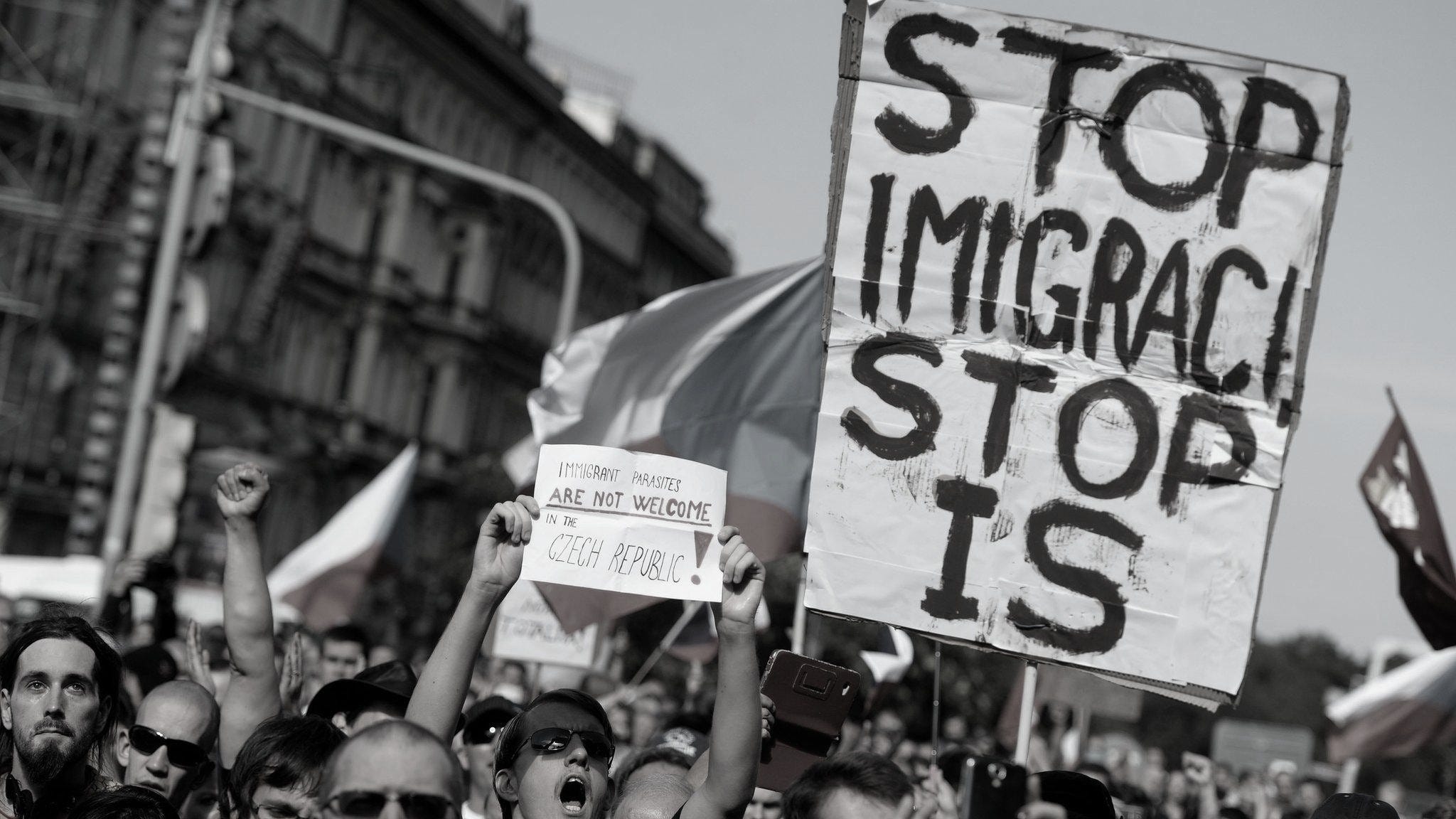
Last year, Romania narrowly avoided a truly fascistic candidate making it to the presidential run-off. Georgescu won the most votes in the first round, but shortly before the run-off election the result was voided because of Russian interference. Even then, another far right nationalist, George Simion made it into the final run-off for the presidential election and he only lost because Hungarians living in Transylvania voted against him.
Not on account of them having good politics (they love a far right politician as much as anyone), but Simion’s version of Romanian nationalism included threatening to kicking ethnic Hungarians out and apparently he vandalised a Hungarian cemetary. This played about as well as you would expect.
Hungary is another case in point. Orban has been in power since 2010 and has been eroding democracy the whole time, on a platform of Hungarian nationalism. His government has strong fascist tendencies (the man has never seen a minority he hasn’t wanted to scapegoat). Political scientists now call Hungary a ‘competitive authoritarian’ country, because there are elections, but the landscape is so stacked against Orban’s opponents that it is hard for other anyone else to win the election.
The governing coalition in Croatia includes the The Homeland Movement , which is a breakaway ultra-nationalist party with members and supporters indulging in all the things you don’t want — war crime denial, Nazi-era chants etc.
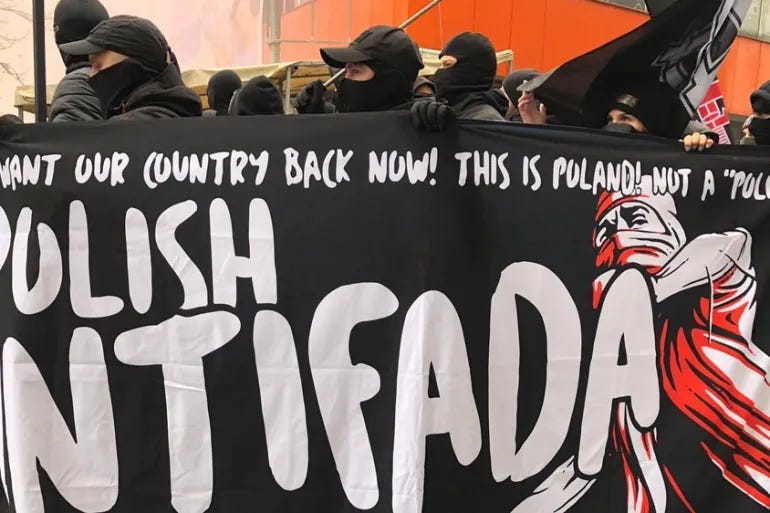
The Freedom and Direct Democracy party is gaining popularity in Czechia right now before elections in October, and Poland can’t seem to get enough of the far right Law and Justice party (even though for a while it looked like maybe they could). But they recently elected a Law and Justice Party candidate as their president.
Far right parties are not unique to Eastern Europe - Marine La Pen made it to the final round of the French election. Meloni in Italy is from the populist right. But there is something about the stubbornness of right wing and far right governments to maintain their support in Eastern Europe that feels different.
It is a question that has been gnawing at me for a while now. Political scientists point to a few potential reasons.
One of the most popular is that none of these countries went through the cultural changes that we did in Australia and a lot of the ‘West’ during the 60s and onwards. Meaning that many of the older population are way more conservative on issues of gender and sexuality than comparable cohorts in other countries.
Another theory is that many of these countries are very homogenous with minimal migration, especially migration that isn’t white. This is not unique to former Soviet countries (look what the Syrian migration did to Germany’s politics), but it is heightened when 90%+ of your population is ethically the same.
I was out at drinks the other night and ended up talking to a someone very involved in political activism in Hungary. She is one of the most explicitly political person I have met here and is obsessed about politics, where a lot of other Hungarians my age seem either apathetic or tapped out.
She thought these reasons mentioned obviously contributed to the problem, but made a larger point that once the communist governments fell, there was no organised left. By the time these regimes collapsed, they were deeply unpopular. Propped up by the Soviet Union and force, people were sick of an authoritarian left that had taken away a lot of their freedoms. Not so much economically, because almost universally when I ask older people about their time under communism, they all look back nostalgically at the social services and the free hospitals, schools, universities etc.
But it was the corruption, the graft and the culture of fear and suspicion.
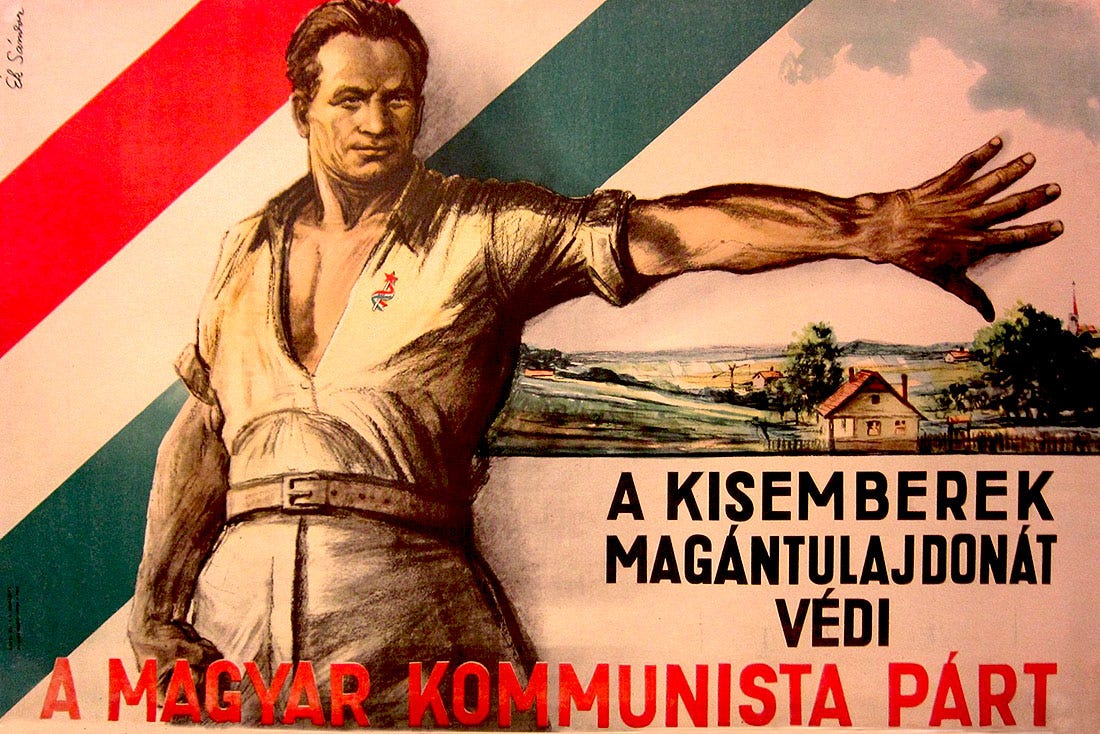
That means that after the demise of USSR and the eastern bloc communist countries were either overthrown or transitioned to democracies, there was no organised, active left movement in the community that was pushing politically and socially.
Much of the ‘left’ was more an amalgamation of anarchists or liberals. At the same time, conservative and right wing movements thrived. She thought this imbalance was one of the key contributors leading to the current situation and made the point it took decades of work by right wing activists. Because many of the countries started off with socialist or centre left governments in the 90s.
Over a coffee and krémes (essentially a vanilla slice, minus the icing) I asked another friend who has worked in politics and knows the region well whether they thought these reasons made sense.
His point, which ties in to many of the ones mentioned above, is that the legacy of communism is countries that are very communitarian. These communism regimes didn’t create hyper liberals who are out there advocating for their sexual freedoms, rights of minorities etc. It created communitarians.
For those, who like me, didn’t know what communitarianism is. It basically is an ideology that rejects both the neoliberal ‘worship the market’ approach of political conservatives while also dismissing liberal and progressive people’s concern for individual rights. It advocates instead for a prioritising of of common moral values, collective responsibility, and the social importance of the family unit.
Essentially, his argument is that the right wing nationalist parties appeal more to the communitarian sentiment of many people in these countries better than the liberal, centre left governments.
He made the point that most of the far right parties are often adopting positions about economic nationalism and protecting the social welfare system, but they do that by branding it with anti-immigrant sentiment or anti-Western propaganda (the EU is an amazing boogeyman for these parties), as well as anti-LGBT+ and pro religious.
A case in point was Simion in Romania claiming Romanians can’t find work or access service because too many migrants are flooding in. Romania’s net migration in 2024 was - 27,000 people. As in, more people left the country than moved there.
Another key problem for more mainstream liberal parties is that their base of support is mostly educated people living in the larger cities. These cities are relatively small compared to megacities in Germany, France etc. But also many university educated people leave countries like Hungary, Romania, Czechia, Croatia etc and end up moving to other countries in Europe where they can be with more people with similar values and earn more money.
These conversation left me wondering what a populist left politics, that was inclusive and not based on vilifying and scapegoating minorities could look like across this region?
It also left me wondering if there is even constituency for that type of politics.
Hungary has its most competitive election in years coming up. But as a lot of people have said about the opposition candidate to Orban, he is a former Fidesz (Orban’s political party) member. He is obviously better than Orban, but he is still very conservative.
Anyway, this barely scratches the surface and i’m curious if anyone has any thoughts!